
Repairing and Replacing Damaged Teeth
Dental crowns and bridges are tried‑and‑tested treatments that can restore both function and appearance when teeth are badly damaged or missing. They are custom‑made restorations that fit over existing teeth or fill gaps to help you eat, speak and smile with confidence.
What is a dental crown?
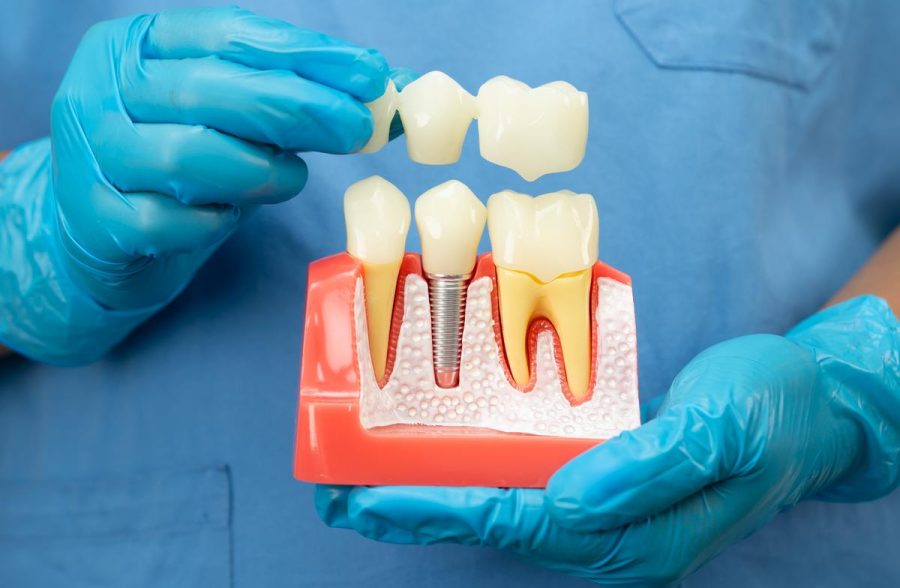
A dental crown is a strong, tooth‑shaped cap that fits over a prepared natural tooth or dental implant. It can strengthen a weakened tooth, restore its shape and protect it from further damage.
Crowns are commonly recommended when:
- A tooth has a large filling and not much natural tooth left.
- A tooth is cracked, broken or badly worn.
- After root canal treatment, to strengthen and protect the tooth.
- To improve the appearance of misshapen or discoloured teeth.
Crowns can be made from porcelain, porcelain fused to metal, zirconia or metal alloys, depending on the tooth, your bite and aesthetic goals.
What is a dental bridge?
A dental bridge is used to replace one or more missing teeth by anchoring an artificial tooth (or teeth) to the natural teeth or implants beside the gap.
- The supporting teeth are prepared for crowns.
- A false tooth (pontic) is attached between these crowns to “bridge” the space.
- The entire unit is cemented into place and functions as a fixed replacement—only your dentist can remove it.
Bridges can restore chewing function, prevent neighbouring teeth from drifting, and help maintain the shape of your face.
What happens during a crown or bridge procedure?
While every case is unique, crowns and bridges usually involve several steps.
- Initial assessment: We examine the tooth or gap, takes x‑rays and discusses treatment options, including alternatives such as implants or dentures when appropriate.
- Tooth preparation: Any decay or old filling material is removed, and the tooth is carefully reshaped so the crown or bridge can fit over it.
- Impressions or scans: An impression or digital scan is taken of the prepared teeth and surrounding bite; this is sent to a dental laboratory where your custom restoration is made.
- Temporary crown or bridge: A temporary restoration is placed to protect your teeth while the final version is being fabricated.
- Fitting and cementation: At the next visit, the temporary is removed, the final crown or bridge is checked for fit, bite and appearance, and then cemented into place once you and your dentist are happy.
Well‑maintained crowns and bridges can last many years, although longevity depends on factors such as oral hygiene, bite forces and regular dental check‑ups.
Looking after your crown or bridge
Crowns and bridges need the same daily care as natural teeth to last as long as possible.
- Brush twice daily with fluoride toothpaste, paying special attention to the gum line.
- Clean between teeth and under a bridge using floss, interdental brushes or super‑floss as recommended.
- Limit sugary snacks and acidic drinks to reduce the risk of decay in the supporting teeth.
- Attend regular check‑ups so your Moonee Ponds dentist can monitor the health of the teeth, gums and restoration.
If you notice tenderness, sensitivity, looseness or chipping around a crown or bridge, it’s important to seek professional advice promptly.
